4256 No Equanimity
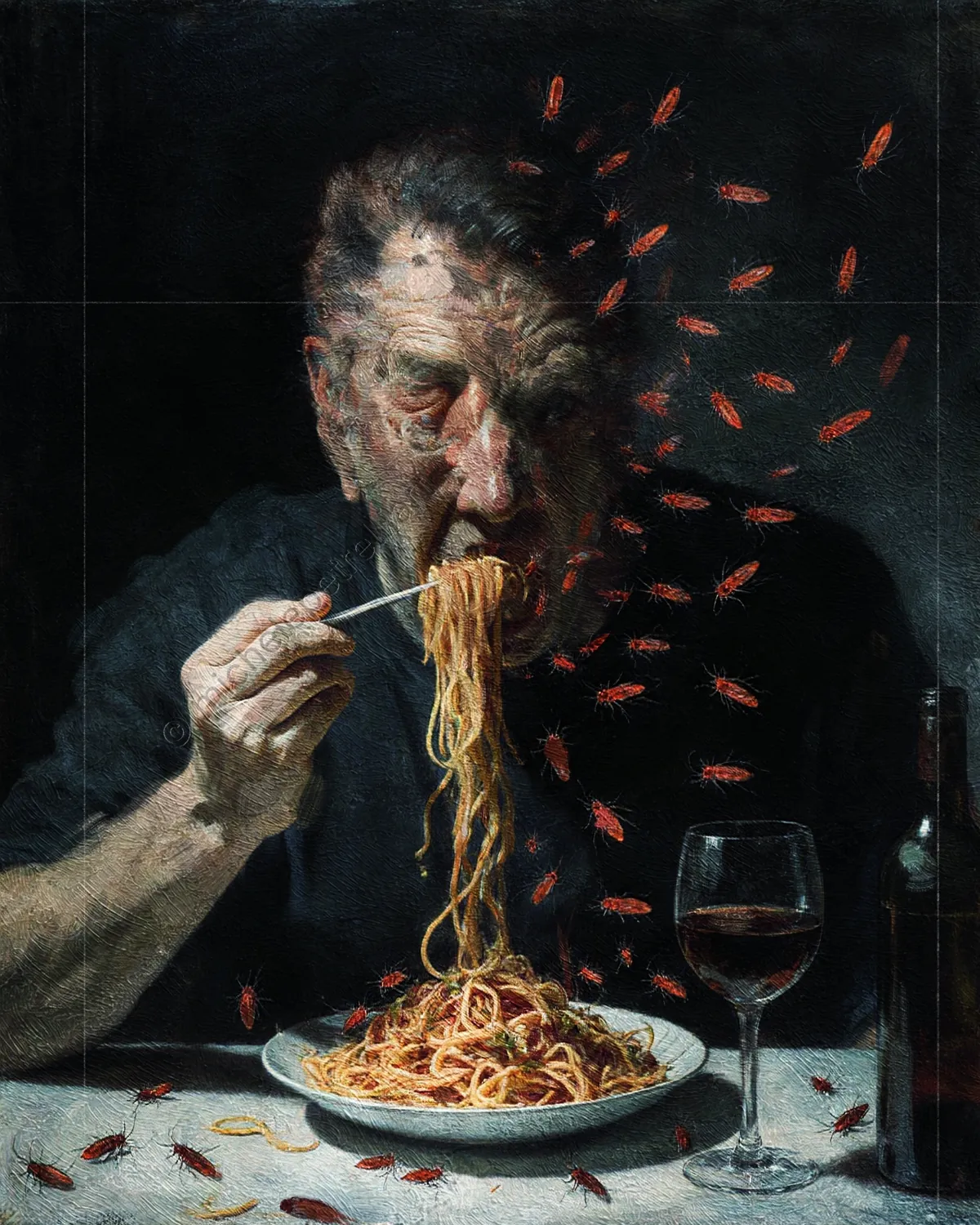
The work portrays the breaking point between interior discipline and the inevitability of biological reaction. At the center of the scene, a man is engaged in the ordinary act of eating, but his posture conveys an electric rigidity, a tension that belies any attempt at detachment. Despite the effort to maintain an impassive face, his is a nervous indifference: the appearance of a balance that does not spring from peace, but from a coercion of the will that is about to crash against the reality of facts.
The multitude of red cockroaches invading the space—swarming around his head, crawling on the plate, and contaminating the food—acts as a powerful metaphor for ontological annoyance. They represent those interferences of life which, however much one tries to rationalize or transcend them through meditative techniques and philosophies of control, remain physical, irritating, and undeniable presences. Here the mind attempts to ignore, but the body cannot avoid feeling: the shiver under the skin, the buzzing in the ears, and the sense of repulsion are automatic responses that no theory can annul.
The man eats with a mechanical, almost furious haste, as if finishing the meal were the last bulwark of a normality now violated. His hands grip the cutlery with excessive force, revealing the failure of the claim to equanimity. These cockroaches are the mirror of each individual's personal dilemmas: for this man they are sewer insects, for others they might be debts, guilt, or existential fears, but the substance does not change. It is the staging of the impossibility of remaining neutral when one's threshold of endurance is trampled upon. The scene suggests that, however much one might study the mechanical nature of the world, the annoyance remains a raw and naked fact—a reaction that imposes itself beyond any spiritual purpose, leaving the individual alone, face to face with the unbearable lightness of their own discomfort.
This license does not allow you to modify or use these images for commercial purposes.
You are allowed to share them only by clearly crediting and tagging the author.