4251 When They Profane the Common Good
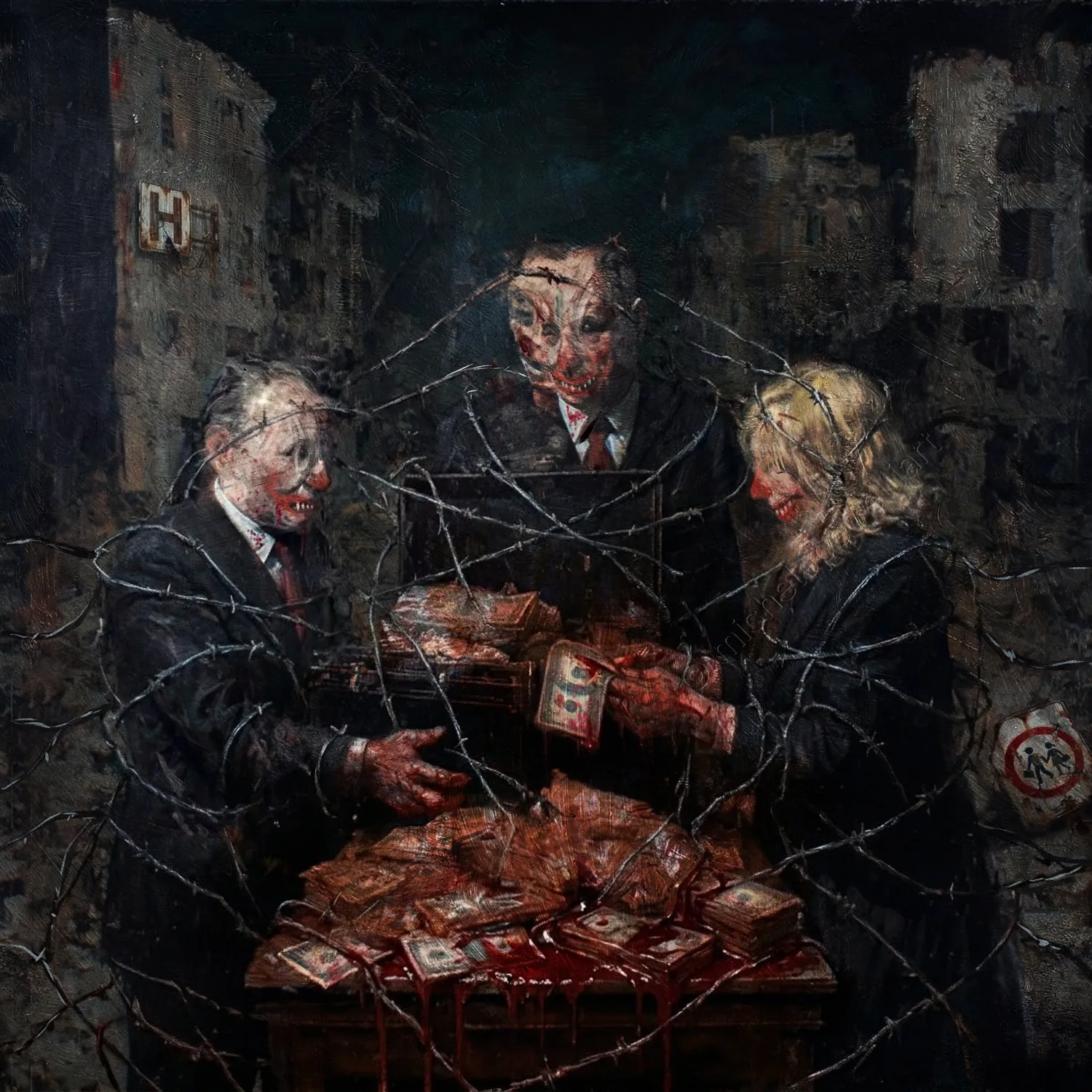
This is the moment when the architecture of power folds in upon itself, revealing the visceral nature of a system that consumes the very things it is meant to protect. Within a perennial twilight, three imposing figures preside over a banquet of remains and currency, entwined in a tangle of metal that binds them in an inescapable grip. The barbed wire acts as an external nervous system: every movement intended to seize profit lacerates the flesh of the person making it, rendering blood and money a single, indistinguishable substance that drips from the edges of a desecrated altar.
In the background, the vestiges of civilization—the places of care and knowledge—appear as silent skeletons. A hospital sign and a school signal lie among the rubble, symbols of a severed social contract. As resources are drained through invisible conduits toward this central table, the very foundations of the surrounding world evaporate, leaving room for a pneumatic void where competence is replaced by the grotesque.
These officiants, their faces transformed into masks of tragic hilarity, operate with the methodical naturalness of those who administer an inevitable decay. They believe they are accumulating to survive the ruin, yet the scene reveals the underlying metaphysical truth: no separation exists between the parasite and the host. By destroying the external pillars, they have constructed their own prison. The bond they tighten to retain wealth is the same one that prevents their escape. The work does not portray a mere chronological event, but an atemporal law: the profanation of the common good generates a universal trap where the executioners end up inhabiting the same wreckage they meticulously orchestrated.
These officiants, their faces transformed into masks of tragic hilarity, operate with the methodical naturalness of those who administer an inevitable decay. They believe they are accumulating to survive the ruin, yet the scene reveals the underlying metaphysical truth: no separation exists between the parasite and the host. By destroying the external pillars, they have constructed their own prison. The bond they tighten to retain wealth is the same one that prevents their escape. The work does not portray a mere chronological event, but an atemporal law: the profanation of the common good generates a universal trap where the executioners end up inhabiting the same wreckage they meticulously orchestrated.
This license does not allow you to modify or use these images for commercial purposes.
You are allowed to share them only by clearly crediting and tagging the author.